UK farmers warn Iran ceasefire too late to stop higher food costs
When fruit grower Ali Capper woke to news that war had broken out in Iran, she says she “felt quite sick” anticipating the repercussions for the UK farming industry.
Farmers and growers in peak planting season are grappling with spiralling costs as the conflict pushes up the price of fuel and fertiliser.
News of a two-week ceasefire aimed at resolving the conflict comes too late for this growing season, says Ali, who represents British apple and pear growers. “Sadly, even if it all ends tomorrow, the costs are baked in now.”
New figures suggest inflation – the rate at which prices rise – for farm running costs is more than 7% higher this March, compared with last March.
The data from independent consultants the Andersons Centre is the first estimate of the overall impact on the agricultural sector since the conflict began.
The Andersons Centre, which provides analysis and research for organisations across the farming sector and has also done a study for the Department for Environment Food and Rural Affairs, is warning of another “cost of farming squeeze”.
Farmers have told the National Farmers Union they can’t absorb the extra costs and food prices will likely have to rise as a result.
‘Brutal’
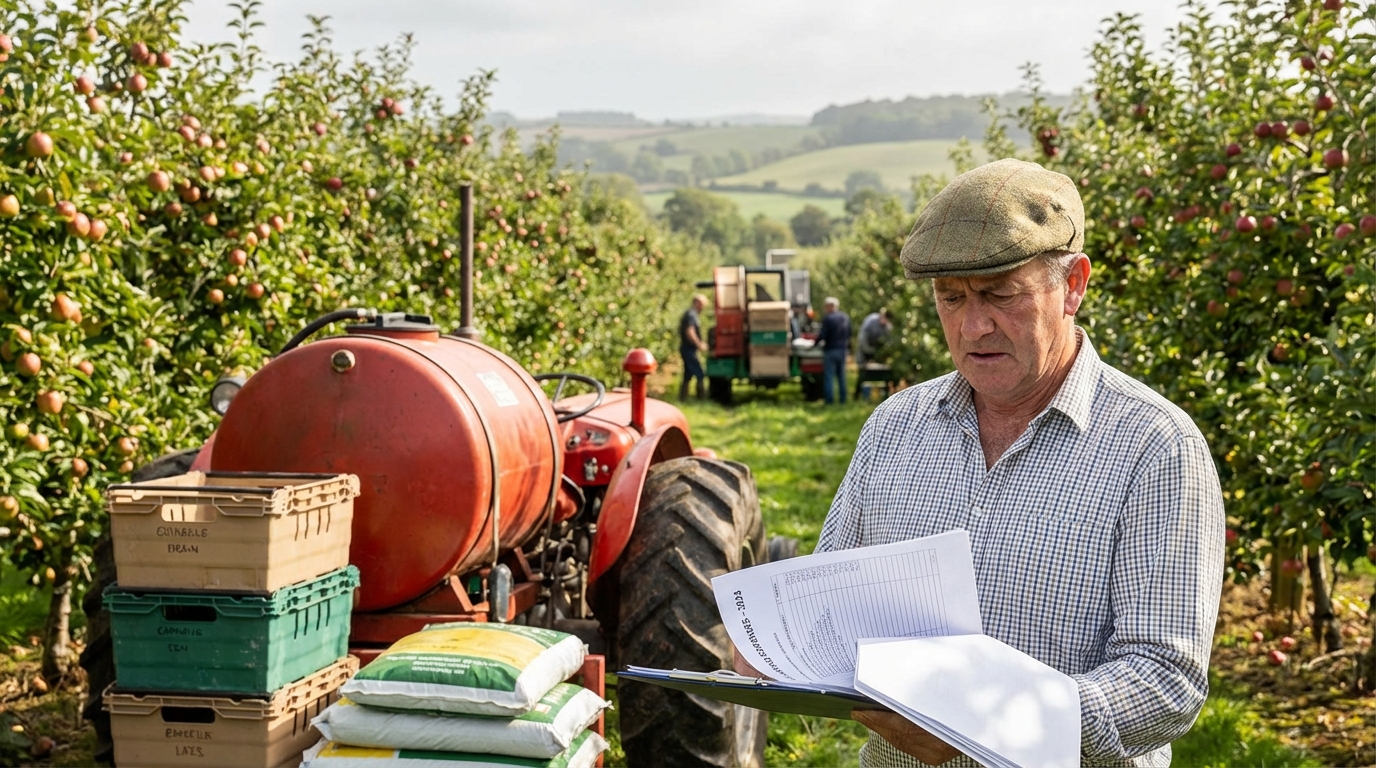
On her farm in Suckley, Worcestershire, Ali says her fertiliser costs have gone up by 40%, red diesel she uses for her tractors has gone up 100% and transport costs are up by about 20%.
A third of the world’s fertiliser usually passes through the Strait of Hormuz, which has been effectively blocked during the conflict and consequently prices have shot up in recent weeks.
Red diesel, a fuel used by farmers in off-road vehicles, machinery and heating has seen its price pushed up by the soaring cost of brent crude – the global benchmark for oil prices.
This all feeds into the cost of food production. Even if the conflict ends within the next two weeks, the Food and Drink Federation expects UK food inflation to reach at least 9% before the end of the year.
The perceived fragility of the ceasefire has led to global oil prices rising again on Thursday, after Wednesday’s drop in price following the ceasefire agreement.
Ali is also anticipating rises in the cost of plant protection products and packaging.
“We will have to pass this on,” she says, adding it was up to the supermarkets she sells to how much they put prices up to customers.
She says the apple and pear sector was already hit by a 30% increase in the cost of production across 2022 and 2023, after Russia’s full scale invasion of Ukraine.
“It was really brutal and, I have to say, when I woke up to the news that it had started again, in Iran, I did feel quite sick,” she says.
She recalls how many farmers went out of business, or became loss-making, during the Ukraine-Russia conflict.
“We can’t go there again. There’s no flex in the system.”
She adds: “We can’t afford to make a loss, we can’t afford to lose our businesses so it’s really important that the costs do go through supply chain.
“You have to be pretty resilient to be a grower, and it has got harder and harder.”